As America marks its 250th year since its founding in a pivotal election year, we find ourselves at an inflection point. The fight for our democracy, our civil rights, and our fundamental right to quality, affordable health care has rarely felt more urgent. But even in this moment, Black America remains resilient; but resilience alone is not enough. We must confront today’s challenges with clear eyes to continue our march toward equality and equity.
For more than a century, the Urban League has stood alongside Black and underserved communities in the fight for equality and economic opportunity. Each year, the State of Black America report provides a data-driven snapshot of our progress and our persistent challenges, showing how the policies we champion, or resist, shape people's lives.
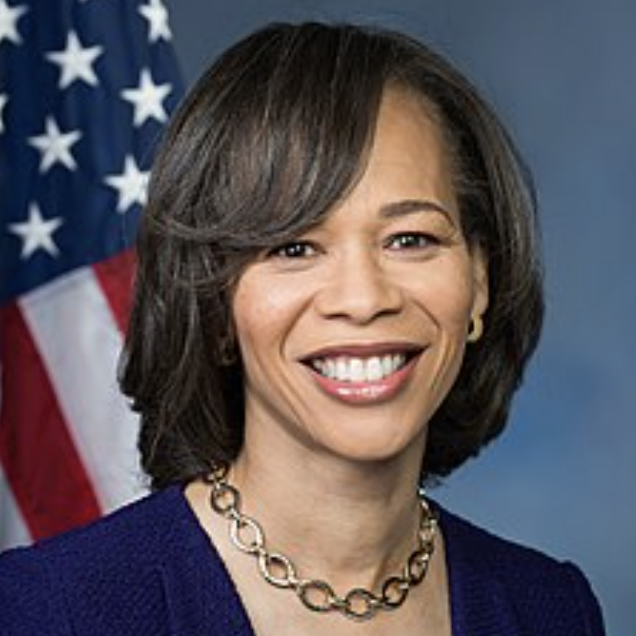
As the former CEO of the Metropolitan Wilmington Urban League, I know firsthand the value of this work. Once an Urban Leaguer, always an Urban Leaguer. Throughout my time in Congress, this report has helped identify emerging challenges, measure progress, and guide the policies we pursue to improve outcomes for families across the country.
As Black America reflects on our nation's 250th anniversary, it is an opportunity to recognize how far we have come. Yet for too many families, that milestone is overshadowed by rising costs and growing uncertainty about whether they can afford life's necessities.
Over the past year and a half, the current administration and its allies have weakened systems millions depend on. They have cut billions from Medicaid and SNAP, and defunded hospitals serving predominantly Black communities. The slashing of the federal workforce, where Black Americans have long served and found pathways to the middle class, has negatively impacted upward economic mobility. They have intentionally blocked our pathways to wealth-building by withholding funding from Community Development Financial Institutions (CDFI) and gutting agencies like the Minority Business Development Agency, leaving Black entrepreneurs with fewer resources at a time of rising costs.
Together, these actions threaten to widen disparities that generations of advocates have fought to close. Instead of celebrating America's progress, many families are simply fighting to survive rather than thrive in the richest nation in the world.
At the same time, efforts to make it harder for Americans to participate fully in our democracy continue to grow in Congress, state legislatures, and the Supreme Court. The right to vote has always been inseparable from the fight for equal opportunity. We cannot protect access to health care, housing, education, or economic opportunity if our voices are silenced at the ballot box.
In the Senate, I serve on four committees that shape nearly every issue affecting Black communities from health care and housing to labor, banking, and environmental justice. Those assignments give me both the opportunity and the responsibility to fight for policies that improve people's lives. Earlier this year, Democrats fought to extend Affordable Care Act tax credits that were set to expire, preserving affordable coverage for millions. Congressional Republicans and the White House ultimately chose not to move forward, leaving millions at risk of losing insurance.
For far too many Americans, the cost of care remains a barrier. That is unacceptable. We should legislate with compassion so that every person has access to affordable, high-quality care at every stage of life. It should not be a luxury to receive maternal care when a Black woman has her child, yet Black women continue to face disproportionately high maternal mortality rates — Black women are dying at three times the rate of our White counterparts. It should not be a privilege for seniors to receive the Medicare benefits they spent a lifetime earning. No family should have to choose between seeing a doctor and paying the rent. Congress has a responsibility to meet these challenges.
That conviction is why I introduced legislation to cap out-of-pocket Medicare costs and continue to lead the Omnibus package, which would make historic investments to address maternal mortality. I’ve worked diligently to craft legislation that protects our communities from gun violence, treating it as the public health crisis that it is, while simultaneously investing in mental health resources. These are not simply policy proposals—they are moral imperatives.
Despite the challenges before us, progress is still possible. This year, I helped pass five housing bills as part of the 21st Century ROAD to Housing package—the first comprehensive federal housing legislation Congress has advanced in three decades. Stable housing is one of the strongest predictors of good health, and expanding affordable housing is essential to closing the health and wealth disparities that continue to burden Black communities. Our challenges and their solutions are intersectional.
The story of Black America is a story of determination. It’s the story of people who organized when they were told to be silent, built institutions when doors were closed, and fought for the right to participate fully in our democracy despite generations of disenfranchisement. Every expansion of opportunity—from the ballot box to quality health care—has come because people refused to accept that inequality was inevitable.
Our people must continue to educate voters, organize communities, build partnerships, and hold elected officials accountable. Progress does not happen by accident. It happens when people stay engaged long after Election Day.
As we commemorate 250 years of our nation, we must decide what America's next chapter will look like. Will we move closer to a future where every family can afford quality health care, every mother can expect a safe pregnancy, our children are free from senseless gun violence, and every senior can retire with dignity? Or will we allow hard-fought progress to slip away?
I know which future I am fighting for. I remain committed to closing the health care gap, expanding opportunity, and ensuring every Delawarean—and every American—has the chance to live a healthy, financially secure life. But it cannot be done alone. The most powerful tool any of us has to shape our future is our voice—and our vote. Our ancestors endured literacy tests, poll taxes, intimidation, and violence so future generations could exercise that right freely. By voting, staying engaged, and demanding leaders who put people first, we can continue the march toward a healthier, more equitable America. As America begins its next 250 years, let history record that when our democracy, our health, and our rights were tested, we chose participation over apathy, progress over retreat, and bright hope over fear.